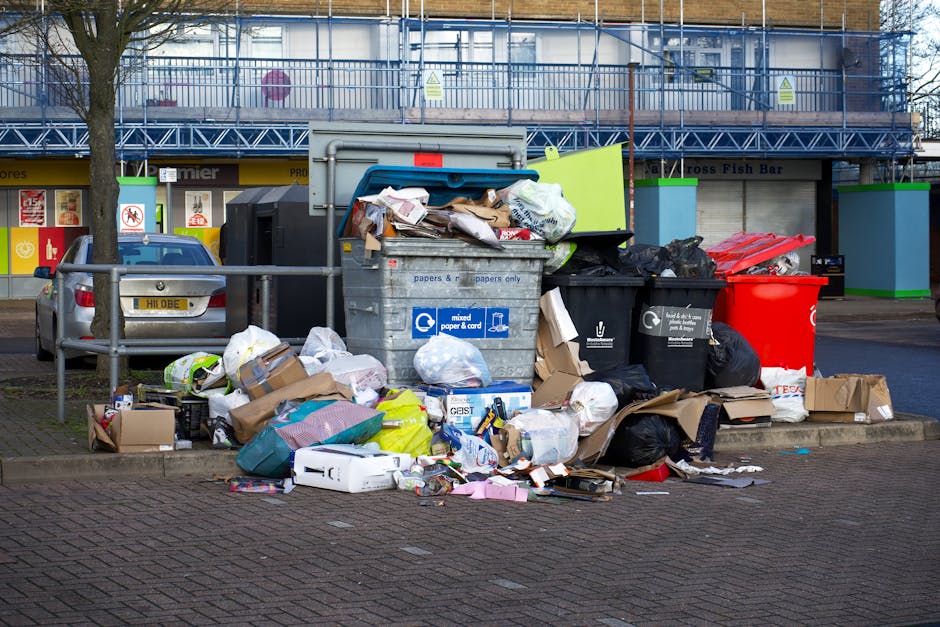
Rubbish removal in Crouch End Broadway made simple

If you have a growing pile of bags, broken furniture, old appliances or post-renovation debris, you are not alone. Rubbish removal in Crouch End Broadway made simple is really about turning a messy, time-draining job into a clear process with the least stress possible. Whether you are clearing a flat above a shop, dealing with a garden reset after a rainy weekend, or trying to shift builder's waste before Monday morning, the goal is the same: get it gone properly, without fuss.
In a busy part of north London, a smart clearance plan saves you time, keeps access clear, and reduces the risk of leaving waste in a hallway, on the pavement, or in the back of a vehicle for far longer than you intended. Below, you will find a practical guide to how rubbish removal works, what to expect, which mistakes to avoid, and how to choose the right approach for your situation.
Why rubbish removal in Crouch End Broadway made simple matters
It sounds obvious, but clutter has a way of multiplying. One old wardrobe becomes three bags, then a stack of cardboard, then a broken chair you keep stepping around at 7 a.m. That is where a simple rubbish removal plan makes a real difference. In a place like Crouch End Broadway, where homes, flats, small businesses and renovation projects often sit close together, waste left in the wrong place becomes more than an inconvenience. It can block access, attract complaints, and turn a tidy property into a temporary hazard.
Simple rubbish removal matters because it protects your time and sanity. It also helps keep your space usable while you carry on with life, which, to be fair, is usually the real objective. Nobody wants to spend a whole Saturday loading bags into a car, only to discover the local tip queue is out the door and the boot is not quite as roomy as you hoped.
There is also a practical side that people sometimes overlook. Waste has different handling requirements depending on what it is. Mixed household rubbish, furniture, electrical items, plasterboard, green waste and office clear-outs can all need different treatment. If you do not separate items sensibly, you can make disposal harder than it needs to be. That is why clear guidance, sensible sorting, and a straightforward collection plan matter so much.
Expert summary: The simplest rubbish removal is not just the fastest option; it is the one that matches the waste type, access conditions, and disposal route without creating extra work later.
If your job involves heavier items or a wider clearance, you may also want to look at general waste removal and specialist support such as furniture clearance or builders waste clearance. For larger household projects, house clearance and home clearance are often the more efficient routes.
How the process works
At its simplest, rubbish removal follows four stages: identify the waste, organise access, choose the right collection method, and make sure the items are disposed of correctly. That is the clean version. In real life, there is usually a bit more sorting, a bit of moving things twice, and one awkward item that will not fit through the door without being angled just so. Still, the process itself is straightforward when it is planned properly.
Here is what usually happens:
- Assess the rubbish. You decide what needs to go: bags, furniture, appliances, garden waste, office items, or a mixed load.
- Check access. Think about stairs, narrow hallways, parking, permits, lift access, and whether items need to be carried through a shared entrance.
- Choose the method. Some jobs suit a van collection, some suit a skip, and some are better handled as a dedicated clearance service.
- Prepare the load. Separate anything reusable, hazardous, or fragile. Box loose materials. Keep sharp items safe.
- Remove and sort. The waste is loaded, separated where needed, and taken to the appropriate disposal or recycling route.
The best results come when you are realistic about what you have. A few bin bags from a loft clear-out is one thing. A damp mattress, a fridge, and plasterboard from a kitchen refurb is another. If you already know your load includes appliances, check fridge and appliance removal for the right handling approach. If you are dealing with bulky soft furnishings, mattress and sofa disposal can be a more practical fit than trying to move everything yourself.
And yes, access matters more than people expect. A job in a first-floor flat above a busy parade can take longer than a ground-floor garage clear-out with parking right outside. The rubbish is the same. The logistics are not.
Key benefits and practical advantages
When rubbish removal is handled well, the benefits go beyond just an empty room. The whole place feels easier to use. You can see the floor again. You can move without sidestepping stuff. There is a kind of mental relief that comes from looking at a clean space and not thinking, "I still need to deal with that."
- Less disruption: A proper collection saves repeated trips and reduces the amount of time waste sits around.
- Better safety: Loose debris, broken glass, nails, and heavy furniture can all create avoidable hazards.
- More efficient sorting: Waste can be separated for recycling, reuse, or specialist disposal.
- Cleaner shared spaces: Useful in flats, terrace homes, and commercial premises with narrow access.
- Improved planning: You can clear in phases rather than letting clutter pile up until it becomes overwhelming.
There is also a financial logic to keeping things simple. If you know what needs removing, you avoid paying for extra handling later. That matters whether you are clearing a single room or a whole property. If you want to compare different ways of budgeting for a job, pricing and quotes is a sensible place to review expectations before you book anything.
For business owners, there is an added advantage: less clutter means a more professional-looking premises. A tidy back room, office, stock area or storage space makes work easier and reduces the "we'll sort that out later" problem that never quite gets sorted out. Funny how that works.
Who this is for and when it makes sense
This kind of service is useful for far more people than you might think. It is not just for big builders or people doing full property refurbishments. In day-to-day life, rubbish removal in Crouch End Broadway made simple can help a wide range of people and situations.
Typical situations include:
- Tenants moving out of a flat and needing a quick clear-up
- Landlords preparing a property between lets
- Families clearing a loft, garage or spare room
- Homeowners dealing with old furniture or broken appliances
- Builders and tradespeople with leftover site waste
- Offices replacing desks, chairs, or filing cabinets
- Garden overhauls with soil, branches, hedge cuttings and general green waste
If you are handling a rental flat, flat clearance can be especially useful because access, stairs and shared hallways often shape the whole job. For bigger domestic clear-outs, loft clearance and garage clearance are practical options when the mess has been building quietly for years.
It also makes sense when the rubbish is awkward, heavy, dirty, or simply too much to handle in one go. Truth be told, if the job makes you sigh before you even start, that is usually a sign you need a better system.
Step-by-step guidance
Let's keep this practical. If you want to approach the job without stress, follow these steps in order. You do not need to overthink it, but you do need a plan.
- Walk the space first. Look at everything that needs to go and decide what is rubbish, what is recyclable, and what is still usable.
- Group items by type. Keep furniture together, bagged waste together, and any hazardous items separate.
- Measure bulky pieces. A quick check of widths, stair turns and doorway sizes can save awkward lifting later.
- Decide what help you need. If the job is small, a simpler collection may be enough. If it is larger or mixed, a full clearance is often easier.
- Check the disposal rules for special items. Electronics, appliances, chemicals and sharp materials should not be treated like ordinary household rubbish.
- Prepare access. Move cars if needed, clear hallways, and make sure the route out is safe.
- Book the removal. Choose a time that gives you a proper buffer. Rushing a clearance on a tight lunch break is not ideal, obviously.
- Confirm what happens afterwards. Ask how the waste will be handled, especially if you care about recycling or reuse.
A good rule of thumb is this: the more mixed or bulky the load, the more value you get from a structured service rather than trying to improvise. If you have a lot of furniture, a linked service such as furniture disposal may help you deal with heavy items cleanly and quickly.
Expert tips for better results
These are the small habits that make a clearance smoother. They are not flashy, but they save time. A little preparation really does go a long way here.
- Do a "keep, donate, remove" sort before you start. Once items are mixed together, decisions get slower.
- Break down what you safely can. Flat-pack furniture, cardboard, and lightweight fixtures are easier to move when reduced in size.
- Keep hazardous and non-hazardous items apart. It simplifies handling and avoids contamination.
- Take photos of the load before collection. It can help you compare quotes and avoid misunderstandings.
- Protect shared spaces. In flats or terraces, use blankets or cardboard on corners and floor edges if needed.
- Leave a clear path to the exit. It sounds basic, but it saves a surprising amount of time.
If the job involves ongoing commercial waste, a business can often benefit from a regular approach through business waste removal. And if you are doing a larger workspace refresh, office clearance is usually more efficient than piecing it together item by item.
One small but useful tip: label anything you want to keep. A sharpie and a bit of tape can prevent the classic "that was meant to stay" moment. Nobody enjoys that one.
Common mistakes to avoid
Most rubbish removal problems are not dramatic. They are just the result of poor planning. That is the good news, because it means they are easy to avoid.
- Underestimating the volume. Waste always looks smaller until you begin moving it.
- Mixing special waste with general waste. This can create handling issues and sometimes extra cost.
- Ignoring access constraints. Narrow stairs, parking restrictions and shared entrances should be checked first.
- Leaving it until the last minute. Last-minute clearances often become rushed, expensive and mildly chaotic.
- Choosing the wrong method. A skip is not always better than a collection, and a collection is not always better than a skip.
- Forgetting about recycling or reuse. Good items should not end up as general waste if they can be diverted.
Another mistake is assuming every item is straightforward. For example, a fridge is not just "another bit of rubbish", and garden waste is not always the same as household waste. If you are unsure, check specialist pages such as garden clearance or hazardous waste disposal before you decide what to do next.
And honestly, the biggest mistake is usually trying to do too much in one exhausted afternoon. We have all been there. It rarely ends beautifully.
Tools, resources and recommendations
You do not need a huge toolkit to manage rubbish removal well, but a few basic items help more than people expect. The aim is to make sorting and moving waste safer and less fiddly.
Helpful items to have on hand
- Heavy-duty bin bags
- Gloves with a decent grip
- Cardboard or blankets for protecting floors and door frames
- Marker pens and tape for labelling
- A hand trolley or sack barrow for awkward items
- Boxes or tubs for loose hardware, cables, and small parts
For anyone weighing up collections against temporary container use, what can go in a skip is a useful reference point when deciding whether a skip-style approach fits your waste type. If you are more focused on keeping the process tidy and straightforward, waste removal is the broader service category that covers many common clear-out needs.
It can also be worth reviewing recycling and sustainability if you want to understand how materials may be separated or diverted from landfill. A surprisingly large number of people care about this once the clear-out is underway, and fair enough too.
Law, compliance, standards and best practice
Rubbish removal is not something to treat casually. In the UK, waste must be handled responsibly, and that means paying attention to what is being removed, where it goes, and who is handling it. You do not need to know every detail of waste law to act sensibly, but you should follow normal best practice.
At a practical level, that means:
- Not leaving waste on pavements or shared access areas without proper arrangement
- Keeping hazardous materials separate from ordinary rubbish
- Using proper handling for electrical items, fridges, and upholstered goods where relevant
- Making sure items are moved safely to reduce injury risk
- Checking that any service you use follows responsible disposal and recycling processes
For commercial customers, compliance and record-keeping matter even more. Office clear-outs, shredded documents, and stock disposals may involve privacy, safety or duty-of-care concerns. If you need secure handling for paperwork, confidential shredding is worth considering as part of your wider waste plan.
It is also sensible to look at provider trust signals. Pages such as health and safety policy, insurance and safety, and about us can help you judge whether a business presents itself in a careful, responsible way. Not glamorous, but useful.
Options, methods and comparison table
There is no single right way to remove rubbish. The best option depends on the size of the job, the type of waste, access conditions, and how quickly you need it gone. Here is a simple comparison to help you think it through.
| Method | Best for | Strengths | Trade-offs |
|---|---|---|---|
| Van collection / waste removal | Mixed household waste, furniture, bulky items, quick clearances | Fast, flexible, less disruption, good for awkward access | May suit smaller to medium loads best |
| Skip hire | Projects with predictable waste and enough space for placement | Handy for ongoing work, easy for repeated loading | Needs space and may not suit tight access areas |
| Specialist clearance | Lofts, garages, offices, furniture, appliances, gardens | Tailored handling, better for mixed or tricky items | Needs clearer description of the load before booking |
In many Crouch End Broadway situations, a tailored clearance beats a one-size-fits-all solution. For example, a flat with stairs and little parking is often easier to clear through a managed collection than by trying to place a skip nearby. On the other hand, a straightforward builder's project may suit a different setup entirely.
If you are comparing different property types, the linked service pages can help you narrow things down: house clearance, flat clearance, garage clearance, and builders waste clearance.
Case study or real-world example
Picture a typical Friday afternoon near the Broadway. A small flat above a mixed-use parade has just had a quick refresh: old shelving, a cracked bedside table, four bags of clutter, a broken toaster, and a heavily used mattress that has seen better days. The resident has one free evening and does not want the waste hanging around all weekend.
The sensible move is to sort the items by type first. The mattress goes in one pile, the small electrical items in another, and the general bags together. The shelving gets broken down carefully so it is easier to carry. The route out is checked, a car is moved from the loading area, and the shared hallway is kept clear. Nothing dramatic. Just organised.
Because the load includes bulky furniture and a bedding item, a combination of mattress and sofa disposal style handling and standard furniture clearance makes the process much smoother than trying to piece it together alone. The end result is a clean room, no repeated trips, and a weekend that does not disappear into rubbish runs.
That is the real point of making rubbish removal simple. Not perfection. Just less hassle and a cleaner finish.
Practical checklist
Use this checklist before collection day. It keeps the job moving and helps you avoid a few predictable headaches.
- Have you separated rubbish from items you still want to keep?
- Are bulky items broken down safely where possible?
- Have you identified any appliances, sharp materials, or hazardous items?
- Is the access route clear from the property to the exit point?
- Have you checked parking or loading restrictions if relevant?
- Are fragile floors, walls, and corners protected?
- Do you know whether your waste needs a general or specialist service?
- Have you gathered any paperwork or instructions for the items being removed?
- Do you have a clear idea of what should be recycled, reused, or disposed of?
If you are dealing with an unusually mixed load, it can help to revisit pricing and quotes so you can plan properly before the collection takes place. A little prep now usually prevents a lot of back-and-forth later.
Get a free quote today and see how much you can save.
Conclusion
Rubbish removal in Crouch End Broadway made simple is really about clarity, timing and the right method for the job. Once you know what is being removed, how it should be handled, and what access you are working with, the whole process becomes much easier to manage. No drama. No guessing. Just a cleaner space and fewer things in the way.
Whether you are clearing a flat, sorting an office, removing a sofa, or tackling a long-neglected loft, the best outcome usually comes from a calm, planned approach. Start small, sort properly, and use the right service for the load. It sounds basic because it is basic, but that is often what works best.
If you are at the point where the clutter is starting to bother you every time you walk past it, that is your cue. Deal with it now, and give yourself the breathing room back.
Frequently Asked Questions
What does rubbish removal in Crouch End Broadway usually include?
It typically includes household rubbish, bulky items, furniture, bagged waste, garden cuttings, light renovation debris, and some specialist items depending on the service. The exact scope depends on the provider and the type of waste.
Is rubbish removal better than hiring a skip?
It depends on the job. If you have easy access, a predictable load and space for placement, a skip can work well. If access is tight, the waste is mixed, or you want a quicker, hands-off option, a collection service may be simpler.
Can I mix furniture and general waste together?
Usually yes, but it is better to separate items where possible. Furniture can often be handled more efficiently if grouped together, especially when you are using a dedicated furniture clearance service.
What should I do with old appliances?
Appliances should be treated carefully because they may need specialist handling. Fridges, freezers and similar items are best dealt with through a suitable appliance removal service rather than mixed in with ordinary rubbish.
How do I prepare for a clearance in a flat?
Clear the route out, check stairs and access points, separate items into sensible groups, and make sure any shared spaces stay tidy. If the property is compact, flat clearance is often the most practical option.
Do I need to sort recyclables before collection?
It helps a lot. Sorting recyclable items from general waste makes disposal smoother and supports better recovery of materials. It is not always essential, but it is definitely good practice.
What happens if I have hazardous waste?
Hazardous waste should be kept separate and handled through the correct channel. Do not put chemicals, solvents, or similar materials into ordinary rubbish bags. Use a specialist route such as hazardous waste disposal.
How can I keep costs under control?
Sort the load before collection, remove anything you want to keep, choose the right service for the waste type, and be clear about access issues. This helps avoid surprises and makes quoting more accurate.
Is rubbish removal suitable for businesses as well as homes?
Yes. It is useful for offices, shops, storage rooms, rental properties, and site work. Business waste can involve different expectations, so business waste removal is often the better route for commercial premises.
How fast can a rubbish removal job usually be done?
Small jobs can often be completed quite quickly once access is clear and the waste is ready. Larger or more awkward clearances take longer. The time depends more on access and waste type than on the number of bags alone.
What if I am not sure which service I need?
Start with the type of waste and the size of the job. For bulky household items, look at furniture or home clearance. For a mixed domestic clear-out, a broader waste removal option may suit better. When in doubt, describe the load as clearly as you can.
Can I get help with large property clearances?
Yes. For bigger jobs, services such as house clearance, home clearance, and office clearance are designed for more substantial clear-outs and often save time compared with handling each item separately.